Showing posts with label corporate communications. Show all posts

Tuesday, December 05, 2006


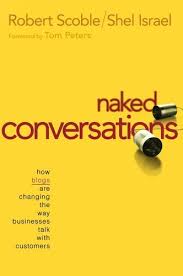
Naked Conversations


I just finished reading Naked Conversations by Robert Scoble and Shel Israel. It's a recently published book on how blogging is changing the way organizations are communicating with consumers. I found that nearly the entire book can be applied to public relations as it relates to the new social media communications tools. This book could really benefit young public relations professionals who are being asked to build an expertise around new social media.

Most interesting to me were the many case studies presented in the book that showed how companies have used blogging as a means to navigate through crisis. After reading through those examples, I've feel I'm better equipped to answer clients when they ask about the pro/cons of blogging. It's nice to be able to point to a company successfully blogging and say to a client "see, this tool really works, even for corporate blogs -- if it's done right.

I say this because too often my clients begin to see how blogging could be used a means to communicate with consumers, but then, just as the idea gets some momentum -- it stalls. There's alot of hand wringing going on in the corporate communications world about blogs, especially upstairs in the C-suites. Certainly, not every one of our clients is a shinning candidate for blogging. But, in my limited experience, I've found that more often than not, companies who really could truly benefit from blogging simply choose not to.

As the PR pros, we've got to be able to counter some of this sentiment and this new book gives us the ammunition to do that.

You can find more about the book and the related Naked Conversations blog here. Thanks to Scoble and Israel, two icons of blogging, for all their work on this book. My copy is already well used from being passed around the office.

Wednesday, November 15, 2006

Blogging: Is Your Organization Ready?


As I’ve posted earlier, I studied under James Grunig, author of the Public Relations Excellence Study (among others), at the University of Maryland. He preached the value of the two-way symmetrical model of public relations and used his own research as proof of its effectiveness in the classroom.

Here’s a brief run down of some of the main tenets of the two-way symmetrical model taken from the 1992 Excellence in Public Relations and Communication Management textbook:

Two-way symmetric public relations ...

  • requires organizations engaging in public relations to be willing to make significant adjustments in how they operate in order to accommodate their publics;
  • relies on honest and open two-way communication and mutual give-and-take rather than one-way persuasion;
  • focuses on mutual respect and efforts to achieve mutual understanding;
  • emphasizes negotiation and a willingness to adapt and make compromises;
  • seems to be used more by non-profit organizations, government agencies, and heavily regulated businesses such as public utilities than by competitive, profit-driven companies.

Many of clients I work with on a daily basis are looking to us for advice on how to connect with the Web 2.0 generation. Our clients know blogging has enormous potential as a communications tool. Many of these companies are eager to launch themselves into the blogosphere, but nearly all of them struggle to adapt to some or all of the points of two-way symmetrical model of public relations.

Blogging seems to be the new litmus test in determining whether or not organizations can become excellent communicators. Earlier generations of PR pros who wanted to adhere to this model may have conducted focus groups or held speakers bureaus to get real feedback from consumers. Now it’s the blogs serve as the vehicle.

When clients ask our firm whether or not they should respond to or start a blog I simply point to a theory developed over 20 years ago and ask:

“Blogs will ‘require organizations engaging in public relations to be willing to make significant adjustments in how they operate in order to accommodate their public’ is your organization ready….?