Showing posts with label public relations. Show all posts

Tuesday, June 24, 2008

Social Media Lunch Break

Looking for the latest and greatest ways to monitor conversations online? Want to check out some of the social media tools we use in Ogilvy's 360 Digital Influence group? Then you should register for tomorrow's (free) BurrellesLuce Webinar: Planning a Complete Social Media Strategy.

My colleague Brian Giesen and I will be presenting an hour-long look at the ways public relations pros can integrate social media into new or existing communications programs.

We'll talk about the strategy and run through some real world case studies showcasing the ways you can bring a digital perspective into the equation.

It's tomorrow from 1-2pm EST. Log on for the full presentation and we'll be fielding questions via chat throughout.

Lunch meeting you just can't get out of? It's cool, they'll post the full presentation at the conclusion for anyone who missed it. [I'll link to it here as well]


Sunday, May 18, 2008

From the Depths of Digital


Last week, I started a new job at Ogilvy Public Relations Worldwide in Washington, D.C. I'm working in the 360 Digital Influence department within Ogilvy's Creative Studio.

I have the privilege of joining a great team with varying specializations from online marketing, web development, SEO, social networking, print designers, the list goes on. With a grand total of five days under my belt, the 360 Digital Influence Blog will give you a much better sense of the department and my new colleagues.

I knew that I was joining the right agency during the first few minutes of orientation on the first day. Among the tax forms and the benefits paperwork was an official Ogilvy PR Blogging Guidelines Memo for employees. Before the list of common sense guidelines there was a paragraph that read:
"Understanding the nature of the blogosphere and how to interact, engage with others, and exchange ideas is essential an in our collective interest. This understanding is a prerequisite for providing meaningful and credible counsel for our clients...We encourage you to engage in this form of communication."

For me, this one memo in the collection of first-day materials was a great introduction to the creative, progressive spirit of the agency and a warm welcome for someone getting ready to jump into the Digital Influence department.

Given the blogging-friendly environment and the digital-focus of my new job I’ll definitely continue to post on Young DC PR Pros. For the sake of all three of my readers I hope my future posts reflect an increased familiarity of the intersection between marketing and social media.

Though, I sure will miss having the Pope as a client…

Thursday, May 01, 2008

Early Morning Marketing


On my way to work this morning I was handed a free Starbucks mug by a guy sporting the familiar green-apron barista uniform. It was outside of a DC Metro station and I was completely taken aback for a two unrelated reasons. First, the only interaction I've ever had with Starbucks has been when I've made a choice to enter a Starbucks. In my experience, Starbucks isn't an organization that you're likely to encounter unsolicited on the street, as opposed to, say, the Girl Scouts or Green Peace. Secondly, I couldn't help but note that this free mug promotion happened the very day that Starbucks was getting ready to announce a 28% nose dive in 2nd quarter earnings.

Maybe I'm just easily impressed at 7:30am on the Metro, but this mug giveaway really helped to deconstruct the narrative I had already developed; that of a company growing into a faceless organization in pretty serious financial trouble. Here's why:

The mug itself isn't too shabby, unlike most free crap, I'd actually use this. It's a full 20 ounces and looks and feels just like the ones sold in Starbucks for $10. That's a pretty big giveaway investment for a company that's not exactly raking in the profit at the moment. Not sure the scale of the giveaway - just at DC metro stations, other locations in the area.


What really drew me into the campaign was the partnership with the Chesapeake Bay Foundation - their logo featured right in the center. Anyone that grew up in the greater Washington-Baltimore area as a kid remembers the 'Save the Bay' campaigns. These were the folks who spray painted 'Chesapeake Bay Drainage' on all the sewers and who came into the schools to warn children that everything from leaving the lights on to skipping math class would ultimately pollute the bay.


While I took the mug because I recognized the Starbucks guy - to be honest I was half asleep and secretly hoped there was coffee already inside - I actually became receptive to the message when I saw Foundation's logo. I opened up the mug hoping for more info and there was a note that read: "Bring a travel mug when you buy a drink at Starbucks and we'll donate 10 cents to the Chesapeake Bay Foundation. Plus you'll save 10 cents on your drink, every time. Together we can help save the bay."


I assume the creators of this mug giveaway were banking on Word of Mouth to carry this message beyond the few hundred people who received a mug. Sure enough, I went to work and put the mug my desk. Over the course of the day, no less than 10 coworkers asked where I got it, which inevitability led to a conversation about our childhood Save the Bay workshops and how much we'd love to run out and get Starbucks right now.


I don't want to beat this Word of Mouth Marketing idea to death, you get where I'm going: one simple mug got a dozen people talking about both the Chesapeake Bay Foundation and Starbucks. In this case, the message resonated because it was localized via the Bay Foundation and delivered through trusted social circles, rather than ad dollars or press releases -- all with an empty cup of coffee.


[Update, turns out the Chesapeake Bay Foundation is pretty in to social networking. They've got a presence on facebook and have blogged about the Starbucks partnership]


Monday, April 21, 2008

Papal Public Relations


If you read a newspaper or turned on a TV over the last week you no doubt know that Pope Benedict XVI recently made his first ever visit to the United States. Our agency, on behalf of the Archdiocese of New York, was tasked with working with the thousands of media outlets that had converged on the New York portion of this historic trip.

As you can imagine, this was public relations event planning to the extreme. Months before the Holy Father landed in the US, we were working to field credentialing requests, process the approved outlets through the Secret Service background checks, and then assign the media to positions at various venues on the Vatican's itinerary like Saint Patrick’s Cathedral, Yankee Stadium, etc.

I won’t bore everyone with the endless hours spent mapping out thousands of media assignments but it’s worth noting that the security procedures were so tight that reporters and broadcasters were to be assigned to fixed positions. That is, once an outlet arrived at their respective location – for example: USA Today at position 13 near the choir loft at St Patrick’s – they were not allowed to move or roam around the venue to gain a better angle or to interview passersby.

This was all in an effort to restrict movement in the moments leading up to the Pope’s arrival or departure. The Secret Service would institute a ‘frozen’ zone surrounding the venue. That meant no bathroom breaks, no running back to the satellite truck for fresh batteries, nothing. No. Movement.

Those that attempted moving out of their assigned location risked getting escorted out of the venue entirely. And, while PR people may have profound respect and understanding for the important role that, say, an AP photographer fills in covering these events, the Secret Service did not distinguish between an unruly member of the public and a top tier photographer angling for a better shot.

With those rules in mind, you can imagine the job of us ‘media escorts’ in ushering the media through the Secret Service sweeps, on the bus, to the venue, to their fixed position, and then standing alongside a contingent of media that spent the entire day reporting live and filing stories.

At night, after getting back from full day of media escorting, we went back to the hotel, showered, changed into street clothes, and went back out to tape down media assignments for the next day’s venue. This was the easiest part of the job – we simply were to duct tape down signs with numbers that would serve as a blueprint of sorts for staff and media the next morning. Compared to the long hectic days, the quiet nights spent shuffling down the pews in empty, dimly lit churches were almost as refreshing as sleep itself. Almost.


This photo is taken from Saint Joseph's Yorkville in Manhattan. As luck would have it, I was assigned an incredible position, in front of the first pews nearly 20 feet from the altar. This photo was taken from that position during the hours we spent awaiting the Holy Father's arrival. In the foreground producers make final adjustments to the lighting, microphone, etc.


This is taken after the Yorkville service, from the steps of the Church. In the foreground Cardinals mill about on the street. In the center, background, a 'frozen' media position of broadcasters positioned to capture the Pope's arrival and departure.


Photo taken at Saint Joesph's Seminary in Yonkers. I was assigned to a huge section of broadcast media at a Youth Rally on the grounds of the Seminary. The rally was about
25,000 people and included Kelly Clarkson as a performer leading up to the Pope's arrival. Here, on-air talent and cameramen wait for the rally to begin in an area that became known as the Media Village as a small city seemingly sprung up overnight as hundreds of outlets set up shop. Unnamed reporter catches some sleep in the foreground. Video from the same position below.


Taken from the main press box in Yankee Stadium.

Video from same position below. Note the radio broadcasters in the rows below me. My apologies for the jerky movements, the box was packed with agents and media. Also I happened to take this clip when a Spanish-speaking performer was addressing the Holy Father. Regrettably, I do not know Spanish. Any guesses at a translation are welcome in the comments.


I plan to write a follow up post touching on the lessons learned after surviving such a massive event. For now, I just wanted to get these initial thoughts and pictures posted.

Thursday, March 20, 2008

Executive Biz Article on Newspapers & Web 2.0


I'm going to break a blogging commandment and cross link to a post I wrote for the Executive Biz Blog. The article looks at how the newspaper business is evolving with web 2.0 applications.

Check it out here if you have a second....

Monday, March 03, 2008

MBA for PR Pros?


Many of my friends who earned bachelors degrees within the past few years have taken the leap into graduate school. As you can guess, many of these students were pre-med or pre-law as undergraduate students and so the transition into graduate school is a logical next step.

Though, for others, especially in the financial services industry, going back to school is an employer-sponsored perk. Recent accounting and business majors who landed jobs at global accounting / financial firms are encouraged to earn MBAs in an effort to further their career – many have some or all of their tuition reimbursed by their employer.

Marketing majors, too, with their subject-area safely inside the walls of most major business schools, seem gravitate toward MBA programs. It seems only natural that students with four years of marketing and business coursework seek out an MBA, especially if a marketing agency offers to help foot the bill.

When it comes to PR firms, it seems tuition reimbursement isn’t really a common benefit. This might be because no one is really demanding it. In fact, from what I can tell in working with communications professionals across a wide spectrum of industries, having an MBA, or any graduate degree, is hardly a requirement for growth. There seems to be a sentiment within our industry that the economic and accounting oriented curriculum doesn’t really apply for your run-of-the-mill Director of Communications position.

Now, as social media blurs the line between PR and Marketing, there’s a real turf war over who is best positioned to counsel clients in this space. Doesn’t it make sense, then, that Public Relations professionals, who so often preach the alignment of communications strategy to the overall objectives of the business, posses the requisite business skills?

The Council of Public Relations firms weighed in last December. You can read the full article here.

Any thoughts on this? From MBAs, younger PR pros, or those currently in grad school?

Thursday, December 13, 2007

Future of PR


Wow, it's been a while. I can't believe it's already December 13th. I've been blogging a fair bit over at Executive Biz, my last few posts have been on senior-level government bloggers and how the feds are adopting social media tools into the workplace. HUD is using Google Maps API, can you believe it?

Anyway, I don't have a brilliant post, just top of mind stuff....

The PR blogosphere seems to be thriving and yet there's been this series of land mines that keep damaging the profession. I mean, even the NYT times is documenting how ugly it's gotten. It's important to remember that not everyone on the planet listens to FIR or reads Luke's Observations of PR. For the vast majority, the only exposure to PR is when issues like these bubble up to the surface of mainstream media. I don't pretend to have the answers, but it sure is frustrating...

It seems that many of the PR gaffes floating around out there are from the entry-level folks employing the 'mail-merge-and-pray' technique. The solution, it seems to me, is to use both in-house education and undergrad coursework to encourage thoughtful communications online.

The next generation of PR pros is not going to simply walk in the door and have these skills on day one. Sure, they're digital natives, and they may not remember 28.8k dial-up. That doesn't mean they've got the skills needed to monitor the conversation about a brand/issue online, or the ability to identify relevant podcasts, or how to set up RSS feeds for a client, etc.

I recently spoke to a class of senior level PR students at a local University. Virtually no one in the class used RSS feeds and by a show of hands less than half had heard of Technorati.

Now, I know, you’re in college; you don’t have time to dork-out with authority rankings, but my point is that you’ve got a whole industry starting to fumble because the landscape is shifting so quickly and 99% of the incoming talent has spent the last four years studying the AP style guide and writing press releases. Those skills are critically important, but isn’t also knowing a how to write a social media new release….?

Maybe I’m just disgruntled because it’s cold and raining in D.C. I’d love some comments on this, or maybe just a great example of digital PR in action to balance out this admittedly one-sided post...

Wednesday, October 31, 2007

Meet the Press

Wow. This has been a bad week for lazy PR people who insist on using mail merge as a communications strategy.

Aaron Brazell, from Technosailor, outed a particularly clueless pitch from Guerilla PR.

Chris Anderson, Editor in Chief of Wired Magazine, was so fed up with unsolicited pr emails that he decided to publish a list of email addresses that had sent him an irrelevant press release in the last 30 days. Ironically, those published emails address will surely be harvested by spammers.

Entry level pr people are often asked to shoulder most of this media list building and outreach. What happened this week is a reminder to do your homework and to never just blast editors and reporters with what is essentially spam.

Rather, get to know your sources, what they cover, and demonstrate your familiarity with a pitch that's tailored specifically for the journalist you have in mind. Having trouble finding the connection between your idea and their beat? Then move on and research a different reporter, or perhaps that outlet isn't suited at all.

Maybe the only good to come of this is the robust debate taking place on the blogs and comments section. The Anderson posting resulted in over 70 comments in less than 48 hours.

Wednesday, March 07, 2007

New Survey Illustrates the Importance of Online Newsroom

Sometimes, it's easy to get carried away by all the possibilities with new social media. Some companies may focus too much weighing the pros and cons of a corporate blog while other PR pros may be too eager to launch the latest and greatest podcast without really considering their clients’ communications strategy.

A new survey, hot off the presses from TKE International text (no , reminds PR pros that virtually all (93%) journalists say it's important for an organization to have an online newsroom. Compare that number with the mere 24% of journalists who say that they "often" research a companies’ blog and you've got a stark reminder about the progress of new social media tools. While some PR pros, myself included, are eager to explore all avenues of social media, it's important to remind our clients what journalists want: an up-to-date newsroom with searchable text (no PDFs!) and access to press releases and the PR contact.

I took a quick look at Jet Blue’s newsroom. There's been enough written about Jet Blue’s recent PR crisis, I won't get into that here, but I think their newsroom is worth a look. If I'm a journalist researching the company and I see that press releases are divided by year-- 1999, 2000, 2001, 2002-Present-- I'm not real confident that last link representing nearly half a decade will be exactly what I need.


As Public Relations professionals it's our job to ensure that our organizations are maintaining a online newsroom that effectively provides journalists information about the company. This survey gives us the ammunition to make the case for a state of the art newsroom. Do this first, then worry about tagging your Flikr photos from the recent press conference.

Monday, February 12, 2007

Advice from the Top

This is the second installment of my "Advice from the Top" column. Regular readers of my blog recall the great advice that Denise Graveline gave us a few months back.

I recently interviewed Richard Toth, APR, from the University of Maryland. I focused on younger pr pros, but this Q&A can really apply to any entry level PR pro. You can read this interview here, or over at Forward where the post has already gotten a few positive responses.

Thanks to Professor Toth for taking the time to speak with me. I'll work on meeting up with more experienced pros for future "Advice from the Top" columns.

I recently sat down with Richard Toth, APR, Fellow PRSA, and lecturer at the University of Maryland-College Park. For my first post, I thought I’d share some of the thoughts from one of my former public relations professors. Let’s jump right with some young pr pro questions…

What’s your advice for recent public relations graduates in terms of the some of the skills you find that young PR pros lack?

New PR pros and students need to demonstrate and follow through on basic curiosity about tactical and strategic communications — the classic five w’s and h on a broad and flexible range of topics. They need to absorb and sort lots of information, going beyond the superficial to ponder and position the “what if?” of situations. Beyond that philosophical big picture, I suggest students and new pros should:

  • Read, listen, observe, ask, write, edit, practice more. In a variety of media — traditional, mainstream and otherwise.
  • Take every opportunity for feedback and to explore and propose options.
  • Take what I call positive risks. Dare to be different, positively.
  • Network, collaborate, participate, mentor and be mentored. Getting started early in organizations — such as PRSSA, PRSA, IABC, their local chapters and members. Such activity can help with all of the recommendations above and below. Don’t forget personal, face-to-face interaction. Follow up with personal thank-you notes and updates. Add value to a contact and relationship as a deposit in the bank of goodwill — for both the giver and receiver.
  • Keep a file of and leverage ideas, examples, stories, contacts, quotes, testimonials, results, successes, experiences, Web sites, blogs, etc. Then connect them to each new situation, challenge or opportunity.

How can public relations education incorporate some of these ‘new social media’ tools like podcasting, blogging, etc. into the curriculum?

As you know, John, as a student in my class a few years ago — you are now using technologies and media that really weren’t around to teach in 2004. That’s why it’s more important for professors and students to know and practice the basic principles and theories with traditional and existing media and technologies, then adapt them as new technologies are introduced, implemented and fine-tuned.

The demonstration I use in class: You and your skills need to be fluid, like water. As professors, we can bring new and more seasoned pros and researchers to orient us to the cutting edge, but not dwell on what may be the latest technology — because it may change the next day, based on your situation, organization, client, goals, experience.

Finally, an interesting exercise is to project some best-case and worst-case scenarios for the future of communication and technology. One of my favorite sites for students to view a video and ponder for challenges and opportunities was recommended by one of our regular guest speakers in the public relations program at the University of Maryland-College Park, David Forstrom of Connect PR.

What are some of differences between starting out in PR in a big agency, small shop, or in-house? There seems to be a lot of debate out that topic and I’d be eager to get thoughts from someone who has had a variety of pr experiences.

Again, just as in technologies and skills — flexibility and variety are keys. I recommend a good mix of different experiences and environments, especially during the first half of a public relations career. Depend on professors, mentors, colleagues, your heart and network for specific advice. But never burn your bridges, nor walk away from any organization or client unless the decision-maker and you can say you did your best. Your individual reputation for dependability, credibility and trust is all you can take with you wherever you go. Preserve, protect, maintain and build on your reputation and relationships — throughout your career.

On a personal note, I encourage students and young pros to avoid limiting their focus to just public relations and communications. Learn the ops side of all businesses and position yourself to be ready for job and career burnout, cutbacks, promotions, demotions, moves, etc. Your careers and circumstances are likely to change more and last longer than my baby boomer generation. Know the business-side of organizations and clients, because you might want or have to do it. Be a generalist with select specialties to differentiate you from and for the market.

Finally, I look forward to students and new pros giving back at least as much — and ideally, more — than they received, for the future of the profession, its education, standards and practitioners.

Thursday, December 14, 2006

Social Media and Public Relations Curriculum

As I read over the Communication Technology section I can't help but notice the report is lacking in the new social media category. I feel much more attention should have been paid to blogging, podcasting and other forms of digital communications. Here is one of the rare, explicit nods to web 2.0…


“New PR tools and technologies, e.g., podcasting, blogging and video blogging, RSS feeding, Internet conferencing, e-networking, interactive media kits and e-mail. The research indicates that all these tools should be clearly presented to students.”

Perhaps it was not the goal of the report to provide prescriptive suggestions, but I’d like to know how the authors suggest rolling these topics in the current publics relations undergraduate curriculum. I hear my clients asking for our counsel on social media news releases, podcasts, or advice on a negative blogger nearly everyday.

Not one of these communications tool were presented to me when I graduated just two years ago. Despite their inability to plan strategically web developers and marketers will begin to elbow out young public relations professionals if we continue to overlook these new communication opportunities.

I spoke with the primary author of the technology section and I’ve included his response to my comments, in full, below:

From Dr. Kruckeberg via email:

"We attempted to address these areas in the section beginning on p. 31, 'Communication Technology.' I was the primary author of this section, and I accept your criticism. You are assuredly correct that clients are seeking counsel (appropriately so) from public relations practitioners about the use of these technologies."


"Your observation makes me think that this section may not be sufficiently prescriptive, but it does–quite importantly in my estimation–argue that, '...(P)ublic relations practitioners must be the managers of how their organizations strategically use communication technology to affect public relationships' (p. 31). "

"Let us hope that practitioners' clients will be astute enough to recognize the limitations and inadequacies of web developers and bloggers, most of whom are not educated in public relations and should not be assuming these important responsibilities in relationship-building, and of course public relations practitioners–as you suggest–must not overlook new opportunities in evolving media technologies. Perhaps the Commission report is not emphatic enough and should have been more prescriptive in its recommendations regarding new social media. However, the Commission does recognize and appreciate the opportunities that exist through new social media." (end quote).

While I wish more attention would have been paid to the nascent social media tools, I agree with what Dr. Kruckeberg said--we must not overlook new opprotunities in evolving media technologies. Thanks again to Dr. Kruckeberg for his interest in young PR bloggers and willingness to engage with a new generation of public relations professionals.

Tuesday, December 12, 2006

Commission on Public Relations Education Report

I've just looked over the recently released report from the Commission on Public Relations Education. It's refreshing to see a reexamination of Public Relations curriculum.

First, if you're looking for a perspective on the new report head over to Forward for Paull Young's interview with the report's two authors, Dean Kruckeberg and John Paluszek.

As I read through the report I noticed two topics in particular (this will be the first post in a series) that I think are worth mentioning.

Firstly, Kruckegerg and Paluszek lay out three different models of undergraduate PR curriculum:

Journalism/Mass Comm;

Communications/English/Liberal Arts;

Business Management;

As I read over the descriptions of each of these programs, I think my coursework at the University of Maryland consisted mostly of the comm/english/liberal arts model. As a corporate communications professional, I’m asked to know lot about certain companies. I could interact with the IT, legal, marketing, and finance departments all within one organization in a given day.

This type of interaction makes wonder if I wouldn’t be better prepared in my line of work had I been offered the Business Management Model. Don’t get me wrong, the University of Maryland’s Public Relations program did a fantastic job of preparing me for life in an pubic relations agency, but I think some of those more business oriented courses would have helpful.

I wonder how many recent graduates are in my similar position: a corporate communications professional with a background with a more liberal arts PR degree. I’d bet more young public relations professional are in that boat than the opposite: a non-profit in-house communications professional with strong coursework in business PR.

If I’m right, and there are a large number of young pr pros wishing they could more fluently speak with, say, the marketing and finance folks, then I’d be a proponent of universities adopting the report’s Business Management model. I’d be eager to hear the thoughts of other young pr pros on this one…

UPDATE: I caught up with Dr. Kruckeberg, one of the authors of the report, via email this evening. He had this to say regarding my idea that, as young PR pros are asked to take on a wider variety of business tasks, it becomes even more important to have a business oriented curriculum with which to fall back on:

"The Commission's research and analysis certainly support your contention, which is also implicit throughout the Commission report when it isn't explicit. Most certainly, you are not saying anything counter to the Commission's recommendations, and recognition of the importance of this business knowledge has been pervasive in the discussions of Commission members as they have prepared this report during the past two years. As an example of a public relations education program that emphasizes business as a critical curriculum component, the major at my university, i.e., the University of Northern Iowa, requires a course in each of these: economics, accounting, management, marketing and consumer behavior"

Thanks to Professor Kruckeberg for taking the time to shed some light on the business oriented curriculum and to speak with young PR bloggers!

I think this report is especially important to young public relations professionals and I'll be posting more about this in the coming days...

Tuesday, December 05, 2006


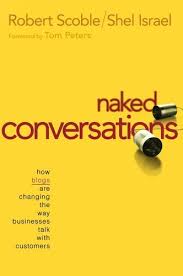
Naked Conversations


I just finished reading Naked Conversations by Robert Scoble and Shel Israel. It's a recently published book on how blogging is changing the way organizations are communicating with consumers. I found that nearly the entire book can be applied to public relations as it relates to the new social media communications tools. This book could really benefit young public relations professionals who are being asked to build an expertise around new social media.

Most interesting to me were the many case studies presented in the book that showed how companies have used blogging as a means to navigate through crisis. After reading through those examples, I've feel I'm better equipped to answer clients when they ask about the pro/cons of blogging. It's nice to be able to point to a company successfully blogging and say to a client "see, this tool really works, even for corporate blogs -- if it's done right.

I say this because too often my clients begin to see how blogging could be used a means to communicate with consumers, but then, just as the idea gets some momentum -- it stalls. There's alot of hand wringing going on in the corporate communications world about blogs, especially upstairs in the C-suites. Certainly, not every one of our clients is a shinning candidate for blogging. But, in my limited experience, I've found that more often than not, companies who really could truly benefit from blogging simply choose not to.

As the PR pros, we've got to be able to counter some of this sentiment and this new book gives us the ammunition to do that.

You can find more about the book and the related Naked Conversations blog here. Thanks to Scoble and Israel, two icons of blogging, for all their work on this book. My copy is already well used from being passed around the office.

Thursday, November 16, 2006

Advice From the Top

Earlier this week I interviewed Denise Graveline, President of Don’t Get Caught Communications, for the first in a series of interviews for my new “Advice from the Top” column. Thanks to Denise for her time and advice for the new generation of public relations professionals in Washington D.C. The interview, conducted via email on 11/16, appears below:

1) What advice would you give to younger PR professionals looking for ways to become agency experts on blogging, podcasting, or any of the new social media?

As with any new medium, sample it: Read lots of blogs, listen to podcasts, see what others are doing. Post comments on blogs -- with care, as your words will be public -- if your comments are relevant to the topic. And get as much hands-on training as you can. One thing I observe in teaching "blogging for your business" workshops is that PR pros of all generations need to catch up with these trends, but younger pros appear to accept the shift in technology faster. Training will help you get there with even more speed. I've even had clients drag their PR reps to my workshops to convince the counsel that a blog is needed -- don't make your clients do that!


2) What about PR students still in undergraduate programs? What topics do feel are not emphasized enough in your work with recent graduates?

Let me get old-fashioned here: Writing, grammar, editing, and critical thinking all are staples of our trade, yet I see PR grads with less and less command of the language -- or the ability to question spurious thinking. I'd love to see young professionals coming out of PR programs who can write and speak well, and analyze situations critically but constructively. Those are not the only skills that will get you a promotion, but without them, you won't go far. Even blogging is merely an easy way to publish writing -- if the content isn't there, you won't get the readers, no matter how cool the technology may be.


3) What’s one thing you wished you knew about communications or PR that took you a while to learn?

How to listen to the client -- whether the client's internal to your organization or external. You can only begin where the client is, no matter how good your ideas are. Fortunately, clients have a way of teaching that to you over time. Accepting that is your challenge, and learning how to bring them around is an art form you should learn....as well as being able to say "no" nicely.


4) How do you see media relations evolving in the next 5 years? Will the press releases still be as ubiquitous as it is now? Will journalists want to be reached in other ways?

Despite their ubiquity, I see less and less use for press releases or press conferences. But as a former journalist who took a "journalism approach" to media relations, I've always favored a phone call and sending over source material, or a fact sheet at best, to a news release. That used to be true only in rapid-fire breaking news situations, but now that we all live in a 24-hour news cycle, it needs to be the norm. Unfortunately, many organizations and firms use releases and news conferences as "concrete" signs of effort, rather than as effective tools. More promising: Using blogs as a media relations tool, particularly in short-term situations -- such as for a meeting newsroom.


5) Considering Washington’s focus on government and politics, have you found it necessary to combine your knowledge of communications with more of a public policy focus?

It certainly helps, whether you work inside or outside politics -- and it's important to remember why your organization is in Washington, typically because you have a constituency that needs to be represented here. When I first came to Washington, I was communications director for a large, nonpartisan scientific organization -- but had to work with the White House when the President addressed our group, or on policy issues as they affected our community. We might not take sides based on politics, but we certainly offered advice and had a viewpoint. Later, I served as a Deputy Associate Administrator in public affairs at EPA, a political appointment, and lived and breathed policy communications. Now I work with organizations of every kind, from government agencies to nonprofits. Most of the long-lived pros in town know how to work on both sides of the aisle, with professionalism and, mostly, without rancor.


6) Do you have a collection of business communications blogs that are a must read for you?

Absolutely. Robert Scoble and Shel Israel's Naked Conversations blog to see what's coming in their next book, "Global Conversations." Brian Brown's Pajama Market reviews model small-business blogs (and full disclosure, called my "Vegetables for Breakfast" blog "small business blog of the day" a while back). But I agree with Brian's advice to small business bloggers on virtually every score. And I walk my blogging classes through a series of corporate, nonprofit and small business blogs I like. You can find some of them on one of my blogs -- along with examples of my student's blogs -- at http://dontgetcaught.biz/webdocs/blog/dgcnews.htm.


7) Any other words of wisdom or comments on blogging, podcasts, PR in Washington in general…?

Take more calculated risks. Ask lots of questions. Get your hands dirty -- you won't know about what works until you've tried it. Get as much training as you can -- look at every job as a new master's degree. Work on a strategy for your career, even if it changes. Change it if it's been the same for a long time. Don't believe everything in your press releases. Tell your boss you need to take the next round of my blogging workshops, coming in early 2007; or bring your boss along. And remember that Washington is really just a very small town with a lot of hot air in it.